

If you’ve been unlawfully present in the United States for some time, leaving for an immigrant visa interview can be stressful if it means possibly triggering a bar that prevents you from returning.
The I-601A waiver offers qualifying immigrant visa applicants a way to request a5666666 provisional waiver of unlawful presence before leaving the country for consular processing. Getting a decision on your waiver before you leave the United States can reduce uncertainty as you prepare for your interview.
Karlin & Karlin helps individuals and families determine whether I-601A may apply and prepare for the consular process ahead. Learn more about your legal options by requesting a free consultation.
Table of Contents



Bring the World’s Best Talent to Your Business, We’ll Make It Happen!
Your company’s success depends on access to top global talent. At Karlin & Karlin, our Corona business immigration attorneys guide you and your employees through every step of the visa process, ensuring accuracy, efficiency, and compliance. Let us help you secure the workforce you need to grow.
What Is an I-601A Waiver?
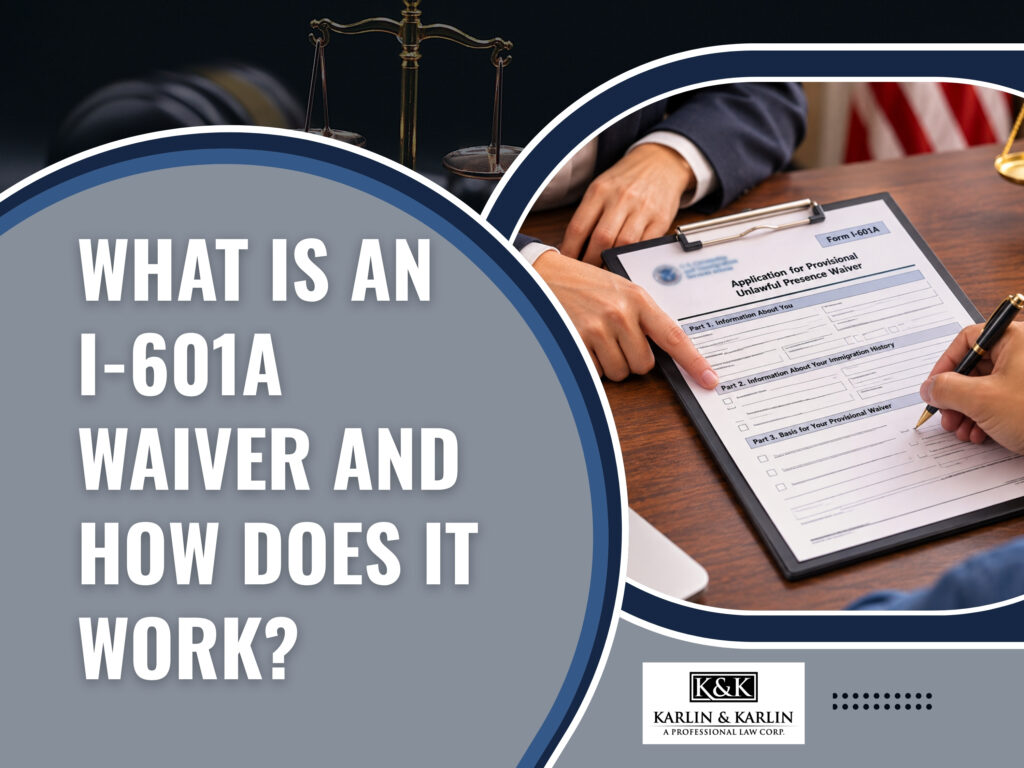
Form I-601A allows certain immigrant visa applicants in the United States to apply for a waiver of the unlawful presence ground of inadmissibility before they leave the country for their immigrant visa interview.
Typically, someone with more than 180 days but less than one year of unlawful presence may be subject to a three-year bar after leaving the United States. One year or more of unlawful presence triggers a 10-year bar. The provisional unlawful presence waiver addresses this in qualifying cases.
What the Provisional Unlawful Presence Waiver Does Not Cover
This waiver only addresses inadmissibility based on certain periods of unlawful presence. Inadmissibility based on other grounds, such as immigration fraud or misrepresentation, criminal history, or a prior removal order, may create separate inadmissibility or eligibility concerns that may need to be handled via a different type of waiver or another immigration filing.
Who May Qualify for a Provisional Unlawful Presence Waiver
Several factors determine eligibility. Applicants generally must be physically present in the United States, at least 17 years old, and in the process of securing an immigrant visa through the Department of State. One of the most important requirements of the waiver is proving extreme hardship.
Proving Extreme Hardship for an I-601A Waiver
To qualify for this waiver, you must establish that being refused admission would cause extreme hardship to a qualifying relative. This may be a U.S. citizen or lawful permanent resident spouse or parent.
Extreme hardship goes beyond the normal hardship that separation brings. USCIS may consider circumstances involving a qualifying relative’s medical needs, the family’s finances, the applicant’s caregiving responsibilities, and conditions in the country where the applicant would live. Rather than relying on just one qualifying circumstance to prove extreme harship, we will likely look at proving multiple circumstances that together prove extreme hardship.
Experienced Legal Help, Delivered with Care and Commitment.
What to Expect from the I-601A Waiver Process
While this process may vary slightly based on your immigration history and immigrant visa category, you can expect to follow these basic steps:
- Filing Form I-601A: The applicant must already have an immigrant visa case in progress with the Department of State. They can then submit Form I-601A with their supporting documentation.
- Biometrics: Applicants need to attend a biometrics appointment. They will submit their fingerprints, photograph, and digital signature. USCIS will also run a background check.
- Leaving the U.S. for consular processing: Finally, the applicant has to leave the United States to attend an immigrant visa interview at a U.S. embassy or consulate abroad. The consular officer reviews their immigrant visa application for eligibility.
I-601A Processing Time
Unfortunately, there is no permanent I-601A processing time that makes it easy for applicants to plan far in advance. USCIS maintains a website that allows you to check current case processing times so you can plan accordingly.
Next Steps If Your I-601A Is Denied
A denial doesn’t mean that your immigration journey is at an end. There may be other immigration strategies available to you. Your next steps depend on why your application was denied. Working with an immigration attorney can help you pivot and move forward.
How Karlin & Karlin Can Help with Your Waiver Application
Applying for an unlawful presence waiver involves more than just submitting a form and hoping for the best. You need to ensure that other grounds of inadmissibility do not apply, as those may prevent you from reentering the country after your consular interview. The team at Karlin & Karlin will review your immigration history for other potential grounds of inadmissibility. If we identify another concern, we’ll explain how it may affect your visa case and what options may be available.
If you’re ready to move forward with an I-601A waiver, we’ll help prepare the form and supporting documentation. We’ll identify potential complications and handle them before you leave the country so you can focus on your consular interview. We’re here to provide support while you’re abroad and as you prepare to return to the country.
Request a Free Consultation About Your Unlawful Presence Waiver
If accumulated unlawful presence is complicating your immigrant visa planning, we’re here to help you throughout the application process. Schedule a free consultation with Karlin & Karlin to verify eligibility and uncover other complications that may lead to issues with your visa.